
Reform or Ruin
The Future of the SBC


This Sunday could mark the beginning of a long and arduous road to recovery for Southern Baptists.
On June 9–10, 2026, the Southern Baptist Convention will hold its annual meeting and elect a new SBC president.
It will also consider eleven proposed resolutions. As is tradition, the resolutions are a theological and political grab bag, ranging from the all-important question, “Who is a pastor?” to the woke conviction that encouraging the acceptance of illegal immigration is loving, just, and humane.
Most resolutions are written in language so vague, slippery, and elastic that pinning down their actual meaning requires a search warrant. One begins to wonder whether the ambiguity is accidental or the entire point.
Imprecise ideas are like landmines. By the time you’ve uncovered what the authors really meant, you’ve already stepped on it. The explosion sends your leg back to 1979 and leaves you unable to chase down the jerk who buried it in the first place.
If you are a messenger with registered voting rights, let me help you out.
First, could someone please submit a resolution to change the title “messenger”?
It’s creepy.
Every year I hear the word and expect an angelic visitor descending from heaven with a word from the Lord. Instead, I get Stanley from Wisconsin asking, “Diversity is a good thing, isn’t it?”
And just like that, disappointment sets in.
Resolution #1 — Religious Liberty
Why?
Seriously, why?
We already have religious liberty. Nobody is proposing an established Baptist state church. Nobody is requiring Presbyterians to pay taxes to support Baptist pastors. Nobody is throwing Methodists into prison for refusing to baptize adults.
So what exactly are we doing here?
The resolution spends considerable time reminding us that colonial Baptists championed religious liberty. Fair enough. They did. That was a principled and commendable position.
But let’s not congratulate ourselves too enthusiastically.
Colonial Baptists were also religious dissenters with very little political power. It is much easier to support religious liberty when you are the group being persecuted rather than the group doing the persecuting.
The real test of principles comes when you have power.
And Baptist history is a reminder that we have not always passed that test.
In 1845, the issue of slavery led to the formation of the Southern Baptist Convention. Many Southern Baptists defended slavery while simultaneously speaking the language of Christian conviction and liberty.
How could a movement champion liberty in one area while failing to recognize and even deny liberty in another?
Funny how that works.
That doesn’t erase the good Baptists did in defending religious freedom. It simply reminds us that institutions are very good at publishing their greatest hits and quietly skipping over the tracks they would rather nobody hear again.
So what is the purpose of this resolution?
Is religious liberty under some immediate threat within the SBC?
Is anyone proposing we abandon it?
Is there an actual controversy being addressed?
Or is this simply an opportunity for Southern Baptists to gather around the campfire and tell ourselves how wonderful Southern Baptists have been?
I honestly don’t know.
I’m neutral on this one.
Vote yes if you want.
I’m just struggling to understand why this resolution needed to exist in the first place.
Resolution #2—Appreciation of the City of Orlando
Like Resolution #1, I’m left asking the same question: Why?
I have nothing against Orlando. I’m sure it will be a fine host city. The convention center is standing. The hotels will provide beds. The restaurants will serve food. Civilization will continue.
Good.
Thank the city.
Send a letter to the mayor.
Buy a plaque.
Shake some hands.
But why does this require a resolution?
We have doctrinal controversies to address. We have denominational challenges to confront. We have churches struggling, women being installed as pastors, and ongoing debates about the future of the SBC.
There is sin in the camp.
Yet one of the proposed resolutions is essentially, “Thank you, Orlando.”
Heartwarming.
I am not opposed to gratitude. Christians should be grateful people.
I am opposed to treating what amounts to a thank-you note as a matter requiring formal action by thousands of Southern Baptist messengers.
Perhaps next year we can dedicate a resolution to the airport baggage handlers.
Vote yes if you want.
I certainly won’t lose any sleep over it.
I just question whether this rises to the level of a convention resolution when there are far more important issues competing for the Convention’s attention.

Resolution #3—Political Violence and Speech
Another one that leaves me asking: Okay, but why?
We’re all grown-ups.
Do we really need a formal resolution informing us that attempted assassinations are bad?
Murder is wrong.
Political violence is wrong.
Threats are wrong.
We already have a book that covers these topics. It’s called the Bible.
Let that be our moral and ethical guide.
What makes this resolution particularly frustrating is that it condemns political violence without mentioning the two most obvious recent examples: the assassination attempts against Donald Trump and the successful assassination of Charlie Kirk.
Think about that for a moment.
The resolution is specifically about political violence and speech.
Yet it somehow manages to discuss political violence without mentioning either Donald Trump or Charlie Kirk.
That takes effort.
It’s like writing a resolution condemning terrorism in 2002 (which the SBC did) and forgetting to mention September 11.
Apparently, all people possess inherent dignity and deserve fair engagement and respect.
Well, almost all people.
Somehow Donald Trump and Charlie Kirk didn’t make the final draft.
Curious.
If political violence is wrong, then have the courage to say so when it happens to people you like, people you dislike, and people who make half the room uncomfortable.
Principles only matter when they are applied consistently.
This resolution should be sent back to the Resolutions Committee.
Add the names.
Address the actual events.
And stop pretending that vague generalities are a substitute for moral clarity.
Don’t be a jerk, Resolution Committee.
Resolution #4—Antisemitism
VOTE YES.
Look, not every resolution needs a lengthy debate.
Not every resolution needs a parliamentary knife fight.
This one is easy.
Vote yes.
There is far too much hatred directed toward Jewish people in this country.
There is far too much hatred directed toward Jewish people in the culture.
And, unfortunately, there is far too much hatred directed toward Jewish people in some churches.
Christians should be the first people to reject antisemitism, not the last.
You do not have to agree with modern Judaism to oppose antisemitism.
You do not have to support every action of the Israeli government to oppose antisemitism.
You simply have to recognize that hatred and hostility toward an entire people group is wrong.
Not complicated.
Not controversial.
Not difficult.
Vote yes and move on.
We have plenty of other resolutions worth arguing about.
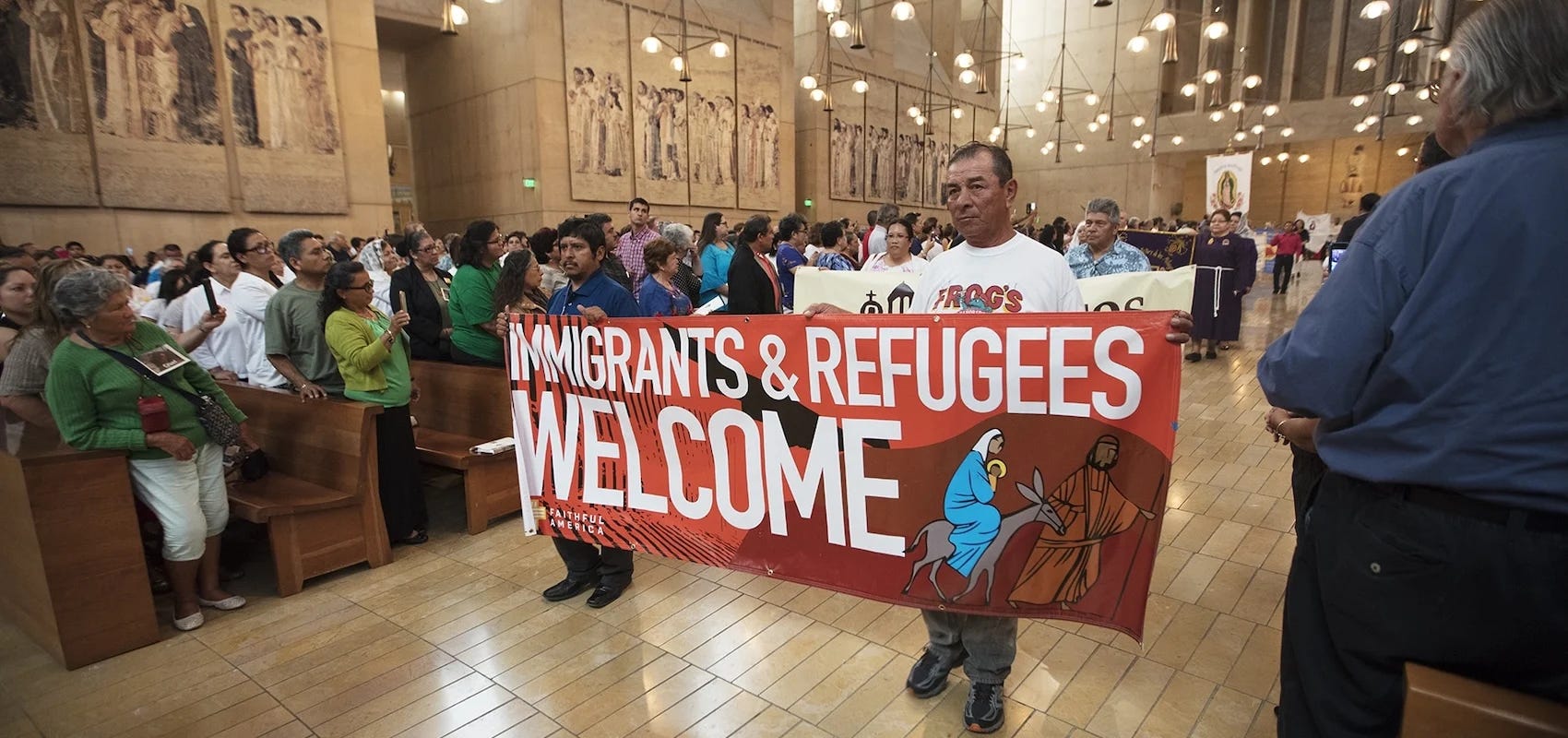
Resolution #5—Immigration
Vote no.
This is exactly the kind of resolution that makes people roll their eyes at the SBC.
We’re a church.
We’re not a lobbying organization.
We’re not a political action committee.
We’re not an immigration policy think tank.
The resolution is filled with the usual language about compassion, dignity, justice, and care for immigrants.
Christians should be compassionate.
Christians should care for people.
None of that is controversial.
What is controversial is the resolution’s remarkable ability to discuss immigration without discussing illegal immigration.
That omission is not accidental.
It’s the entire debate.
Nobody is arguing that immigrants should be treated with cruelty.
The actual question is whether a nation has the right to enforce its laws and maintain secure borders.
The resolution manages to speak at great length about immigration while carefully avoiding its illegal nature, which defines the controversy.
That’s impressive.
It’s like writing a resolution on transgenderism and never mentioning the boys in the girls’ locker room.
It’s like writing a resolution on the Titanic and blaming the water.
At some point the omission becomes the message.
This feels less like a resolution and more like virtue-signaling wrapped in church language.
If Southern Baptists want to debate immigration policy, then have the debate openly and honestly. Better yet, have it in the voting booth, not here.
If Southern Baptists want to focus on the mission of the church, then focus on the mission of the church.
But let’s stop pretending political advocacy magically becomes non-political when it is written in sufficiently soft religious language.
Vote no.
Resolution #6—Assisted Suicide and the Sanctity of Life
This title is misleading.
This is not a resolution about the sanctity of life.
It is a resolution about euthanasia.
Those are two distinct issues.
When Southern Baptists hear the phrase “sanctity of life,” they think about abortion. Yet this resolution never mentions abortion.
Not once.
That is a problem.
If the SBC is going to speak about the sanctity of life, then it should prioritize the clearest and most urgent sanctity-of-life issue before us: the protection of innocent children in the womb.
Is assisted suicide wrong?
Yes.
Is it tragic when a terminally ill adult with ALS, cancer, or a brain tumor chooses to end his own life?
Yes.
But that adult is still making an adult decision. It may be sinful. It may be tragic. It may be morally wrong. But it is still his decision.
An unborn child does not get a decision.
The baby in the womb does not get a vote.
The child being killed does not get to say, “Actually, I would prefer to live.”
That is the difference.
One involves an adult making a sinful choice about his own life.
The other involves an innocent child being destroyed by someone else.
So yes, oppose assisted suicide.
Fine.
But do not dress this up as the sanctity-of-life resolution while failing to mention the most obvious sanctity-of-life issue in the room.
That is not clarity.
That is misdirection.
This resolution also fails to address the real danger of euthanasia laws.
The danger is not limited to terminally ill patients.
Human beings are remarkably creative when given permission to justify sin.
Today it is ALS, cancer, or brain tumors.
Tomorrow it is depression.
Then loneliness.
Then mental health struggles.
Then obesity.
Then a legal guardian deciding that a severely disabled person or ward would be better off dead.
Nothing says compassion like creating a legal pathway for despair and calling it dignity.
So yes, we can stand against assisted suicide.
But this resolution is too vague to be helpful.
It omits abortion.
It blurs the priority.
It fails to make necessary distinctions.
And it does not adequately warn against the inevitable abuse of euthanasia laws.
Send it back to the Resolutions Committee.
Clarify the scope.
Clarify the priority.
Clarify the danger.
Then bring it back.
Resolution #7—The Church’s Opportunity to Disciple and Care for Persons with Disabilities
What does this even mean?
Of course the church should disciple and care for people with disabilities.
Who is arguing otherwise?
Show me the pastor intentionally refusing to minister to a disabled person.
Show me the church turning away disabled visitors.
Show me the elder board that voted, “Nope, we don’t want those people here.”
Find me that guy.
I would argue he is unqualified for ministry and should be removed from office.
This resolution strikes me as a solution in search of a problem.
Everyone agrees disabled people should be loved.
Everyone agrees disabled people should be discipled.
Everyone agrees disabled people should be welcomed into the life of the church.
The real question is what accommodation looks like in practice.
Some churches have elevators.
Some don’t.
Some churches have the financial resources to renovate their facilities.
Some are struggling to keep the lights on.
There is a massive difference between refusing to minister to disabled people and being unable to eliminate every physical barrier in a building that was constructed seventy years ago.
Those are not the same thing.
Recently, I was on a business trip to Seattle.
The genius responsible for ordering lunch decided everyone was having vegan sandwiches because she was vegan.
Apparently, because one person had a preference, everyone else needed to suffer through rabbit food.
Nobody asked for it.
Nobody wanted it.
But one self-important person decided her preferences should become everyone else’s reality.
That’s what concerns me about resolutions like this.
Maybe there is a church somewhere pastored by a complete idiot who refuses to minister to disabled people.
If so, remove him.
He’s unfit for ministry.
But you don’t create expectations for thousands of faithful churches because one hypothetical Lucifer exists somewhere in America.
We already have a process for dealing with pastors who fail to meet biblical qualifications.
It’s called Matthew 18.
And let’s be honest. Installing an elevator to access one room on the second floor is not the only way to accommodate someone.
Churches have been finding practical ways to love, serve, and include people for generations.
The assumption that every barrier must be physically eliminated or a church is somehow failing is exactly the kind of thinking that creates resentment toward otherwise good intentions.
The vegan sandwiches didn’t make that woman more virtuous.
They simply informed everyone else that she was selfish, entitled, and more interested in making a statement than serving her colleagues.
The SBC doesn’t need virtue-signaling resolutions.
The SBC needs biblically qualified pastors who already understand they are supposed to love people.
This resolution needs additional clarity.
Define the problem.
Define the expectation.
Define what churches are actually being asked to do.
Then bring it back.
Resolution #8—On Finishing Well in Life and Ministry
I’m seeing a pattern here.
Yeah, okay, but why?
Who exactly is opposed to finishing well in ministry?
What Southern Baptist is standing up and arguing that pastors should abandon their families, embezzle church funds, abuse their authority, and flame out in spectacular fashion?
Nobody.
Of course pastors should finish well.
Of course ministers should remain faithful.
Of course church leaders should persevere in godliness, integrity, humility, and holiness.
The Bible already says all of that.
Extensively.
In fact, God devoted entire books of the Bible to the qualifications, character, conduct, and accountability of church leaders.
It’s called 1 Timothy and Titus.
We don’t have a knowledge problem.
We have an obedience problem.
That’s what makes this resolution frustrating.
The SBC keeps writing strongly worded resolutions about problems it seems unwilling to address directly.
We don’t need another resolution telling pastors to be faithful.
We need churches willing to remove pastors who aren’t.
We need churches willing to confront abuse of power.
We need churches willing to enforce biblical accountability.
We need churches willing to protect congregations from leaders who violate the sacred trust entrusted to them.
Writing a resolution about finishing well doesn’t make anyone finish well.
Actually doing something might.
You know what would help?
Following the biblical model of church leadership.
One of the great weaknesses in many SBC churches is the absence of a genuine plurality of elders.
The New Testament consistently presents churches being led by multiple elders, not one man operating as an unchecked CEO with a Bible verse attached to his email signature.
The pattern is everywhere (Acts 11:30, 14:23, 15:2, 16:4, 20:17, 21:18; 1 Tim. 5:17; Titus 1:5; Phil. 1:1; James 5:14; 1 Peter 5:1–2).
Yet many SBC churches continue to function with a structure that concentrates enormous authority in a single individual.
Then everyone acts shocked when abuses occur.
I’m shocked you’re shocked.
You mean giving one person tremendous authority with limited accountability occasionally produces abuse, arrogance, bylaw violations, intimidation, and inappropriate behavior?
Who could have seen that coming?
The solution is not another resolution.
The solution is biblical church government.
The solution is accountability.
The solution is churches actually practicing what the New Testament teaches.
The SBC should spend less time writing about finishing well and more time creating environments where pastors are more likely to finish well.
Vote no.
Not because the principle is wrong.
Because the resolution accomplishes nothing.
Do something about the problem instead of writing about it.
Resolution #9—Appreciation for Bivocational Pastors
Here we go again.
Another resolution that everyone agrees with.
Another resolution that nobody opposes.
Another resolution that says all the right things while accomplishing absolutely nothing.
Of course bivocational pastors should be appreciated.
Of course they should be honored.
Of course they should be recognized.
Many of these men are working full-time jobs, caring for their families, preparing sermons, visiting members, counseling people, conducting funerals, and keeping small churches alive with little recognition and even less compensation.
They deserve our gratitude.
The question is: Is a resolution the best we can do?
Really?
This is what appreciation looks like?
A few paragraphs on a piece of paper passed at an annual meeting?
How generous.
How sacrificial.
How inspiring.
The SBC has been talking about supporting bivocational pastors for decades.
Resolutions in 1988 and 2006 called for greater support and resources.
Wonderful.
What happened?
Did those efforts work?
Did they fail?
Did anyone measure the results?
Did anyone follow up?
Or do SBC resolutions simply disappear into a filing cabinet until someone decides to write the same resolution twenty years later?
Before passing another resolution, perhaps we should evaluate the previous ones.
That seems reasonable.
And while we’re discussing support for bivocational pastors, let’s talk about the systems that supposedly already exist.
We have state conventions.
We have local associations.
We have the Tennessee Baptist Mission Board.
We have NAMB.
Yet I personally know men willing to provide pulpit supply, serve interim roles, or even consider bivocational pastorates who have struggled to connect with pastorless churches.
Likewise, I know churches seeking pastors that have not found these resources particularly effective.
Maybe others have had better experiences.
But if we’re serious about supporting bivocational pastors, then perhaps we should spend less time passing appreciation resolutions and more time evaluating whether our existing structures are actually working.
Appreciation is good.
Support is better.
Results are better still.
Vote no.
Not because bivocational pastors are unworthy of recognition.
Quite the opposite.
Because they deserve more than another resolution telling them how much we appreciate them. They deserve actual support through actions and dollars, not words.
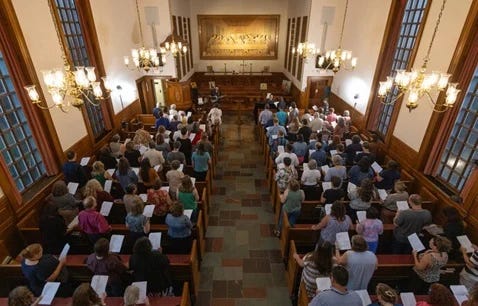
Resolution #10—The Importance of the Physically Gathered Church in the Digital Age
VOTE YES.
Finally, a resolution that addresses an actual issue. Too bad they buried it second to last on the list.
The Bible is remarkably clear on this matter. The church is a gathering.
Paul writes, “When you come together as a church...” (1 Cor. 11:18).
Not when you log in.
Not when you watch a livestream.
Not when you catch the replay sometime Tuesday night between Netflix episodes.
When you come together.
The Greek word ekklesia literally refers to an assembly or gathering.
The church is not merely something we are. It is something we do.
When we say, “Let’s go to church,” what we actually mean is, “Let’s gather together.”
A digital audience can consume content simultaneously while remaining physically separated and isolated from one another.
That may be many things, but it is not an assembly; it is not a gathering; it is not the church.
Hebrews 10:24–25 commands believers not to neglect meeting together.
The command is not to watch together.
To meet together.
There is a reason for that.
The church is not merely a collection of individual Christians who happen to believe the same things. The church is the body of Christ (1 Cor. 12:12–27).
A hand separated from the body ceases to function as intended.
An eye disconnected from the body ceases to function as intended.
Body parts are not designed to operate independently.
Neither are Christians.
This reminds me of a pastor I know who tells his people from the pulpit that if they only have one hour available on Sunday morning, they should skip the worship service and attend Connect Group instead.
That is a terrible ecclesiology.
Connect Group is not the church assembled.
Sunday School is not the church assembled.
Online church is not the church assembled.
These ministries can be valuable.
They promote fellowship. They encourage discipleship. They provide teaching, accountability, and spiritual growth.
They are ministries of the church. They are not the gathered church.
The gathered church is the gathered church.
That’s why this resolution matters.
The digital age has convinced many people that watching is the same thing as participating.
It isn’t.
A livestream is not a substitute for gathering with God’s people on the Lord’s Day in the same place.
Vote yes.
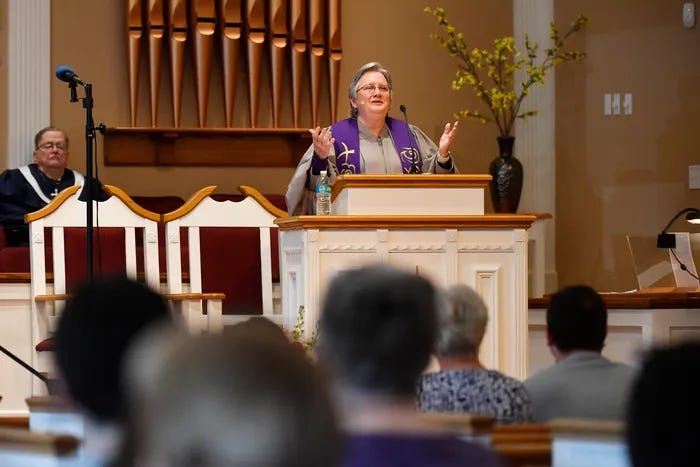
Resolution #11—The Office and Function of Pastor/Elder/Overseer
VOTE YES.
And here we are.
The most important resolution of the bunch.
The one that actually addresses an issue dividing churches, seminaries, state conventions, and denominational leaders.
The one that speaks to biblical authority, church order, and pastoral qualification.
The one that should have been first on the list.
Instead, it’s last.
Apparently, thanking Orlando was more urgent.
Apparently, commemorating obvious moral truths was more pressing.
Apparently, all the other resolutions had to go first before we finally arrived at the issue that has generated controversy, confusion, and conflict across the SBC for years.
That’s unfortunate.
Because this is the resolution that actually matters.
This is easy.
In 1st grade, children receive formal instruction in basic grammar, including nouns and pronouns.
1 Timothy 3:1–7 includes 10 male pronouns and 5 male nouns. That’s 15 instances of precise male grammar in 7 verses. What overly educated PhDs call a grammatical pattern.
The quantity, cadence, and density are there on purpose.
The office of pastor is distinctly male.
There is no such thing as the female office of pastor.
If you come away from reading 1 Timothy 3:1–7 and think there is, then you’ve failed 1st-grade grammar and are therefore disqualified from the office of pastor anyway.
Alright, let’s do 4th-grade math now.
First, in those seven verses, there are 100% male references.
If we divide the male references by the number of verses, we get approximately 2.14 male references per verse.
Remarkable.
The Apostle Paul apparently forgot to include a single female reference while discussing the qualifications for the office.
Seven verses.
Fifteen male references.
Zero female references.
What are the odds?
So, based on the evidence of universally accepted grammar, elementary mathematics, and good old common sense, vote yes.
Oh, and one more thing.
Can someone also submit a resolution to slap the hand of the ESV Translation Oversight Committee for replacing “man” with “anyone” in 1 Timothy 3:1?
They were better off saying “any man.”
At least that would have been honest.
Instead, we got “anyone,” which is more accurate in creating a bunch of evangelical feminists with Eve’s DNA shouting, “We are the anyone!”
No, you are not.
Baptist Women in Ministry, I’m talking to you.
A bunch of vocal Eves in the Baptist community advocating for full affirmation of their call to pastor, preach, and minister just like the boys.
Sorry, ladies, that you chose passive men who can’t tell you no.
Your proof-text verses, like Matthew 28:8 and Acts 2:17–18, don’t miraculously mean something they never meant to their original audience just because you wish they did.
A text cannot mean something to us that it never meant to its original audience.
And that’s why you can’t be pastors.
Your exegesis sucks.
Vote yes.
Frankly, this resolution should have been Resolution #1.
Conclusion
For all the sarcasm, jokes, and frustration, this year’s annual meeting matters.
A lot.
This election cycle will help determine whether the SBC begins a long-overdue course correction or continues drifting further into theological confusion, institutional cowardice, and cultural accommodation.
Most of these resolutions will be forgotten before the hotel carpets are vacuumed.
The real issue is leadership.
The real issue is direction.
The real issue is whether Southern Baptists still possess the courage to believe what they claim to believe.
Do we actually believe the Bible is sufficient?
Do we actually believe God’s design for the church is good?
Do we actually believe pastors are qualified men?
Do we actually believe the church is a gathered assembly?
Do we actually believe biblical faithfulness matters more than cultural approval?
That’s what’s really on the ballot.
Southern Baptists have a choice.
We can pursue reform, clarity, and conviction.
Or we can continue down the road of ambiguity, accommodation, and progressive drift.
One road leads to renewal.
The other leads to irrelevance.
I wonder if the religious liberty one is, like the political violence one, trying to skirt the issue by being vague? There was that recent DoJ report about political weapoization against Christians.
The common thread through most of them seems to be the 11th commandment of being nice.